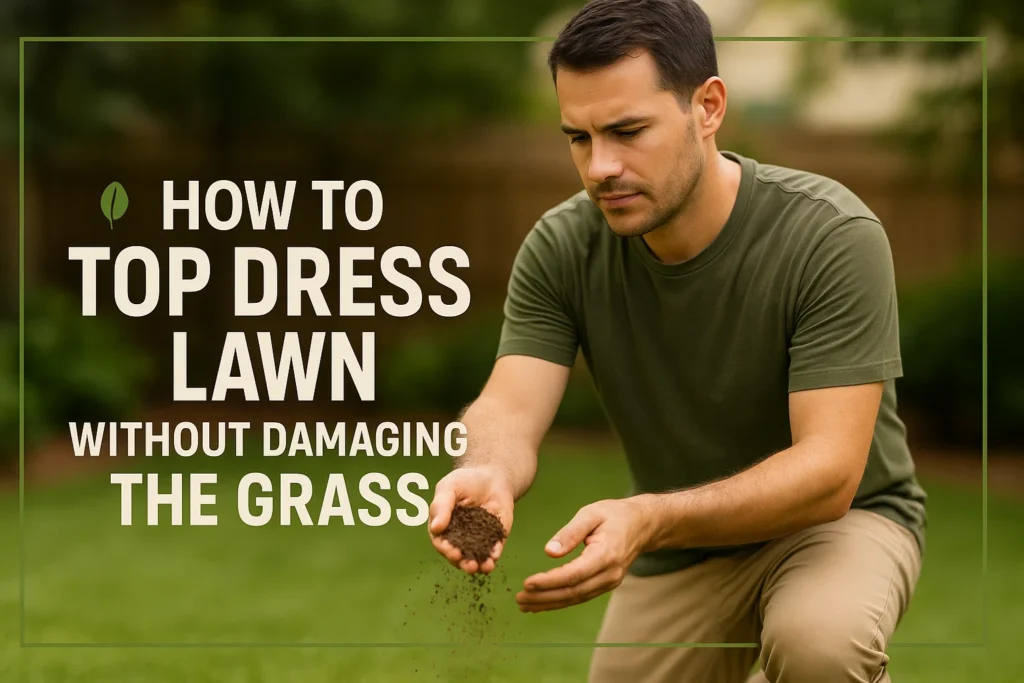
Top dressing a lawn can help improve the look and health of your grass. It is used for improving soil and strong root development while smoothing out the ground. But top dressing has to be handled with care; it’s so easy to ruin the grass. Employing the incorrect soil mix or applying too thick a layer can smother the grass, or it may obstruct sunlight. And yet, there is a right way and time to do it if you want to ensure your grass stays healthy.
In this guide, I will explain to you how to top dress your lawn without damaging it! By utilizing these easy steps, you’ll be able to grow a healthier lawn in no time!
What Is Lawn Top Dressing?
Lawn top dressing means spreading a thin layer of material over the lawn. This is a good method to enhance the health of your lawn and improve soil quality. Top dressing smooths out uneven lawn areas, reduces build up of thatch and improves water drainage. It also encourages good soil organisms, microscopic creatures in the soil that eat organic matter and release nutrients.
How to Top Dress Your Lawn Without Damaging the Grass
Top-dressing is an excellent way to rejuvenate the health and beauty of your lawn. But the application must be done cautiously to avoid damaging your grass. This comprehensive guide will show you how to top dress your lawn the right way so you get all the benefits and don’t damage your turf.
Step 1: Prepare Your Lawn
Begin by cutting your grass down low, but don’t scalp it. We need this material to get into the soil ourselves, so when we top dress, mow short for better penetration and more even distribution. Once you have cut the grass, use a rake to collect any debris, thatch and dead grass.
Step 2: Choose the Proper Top Dressing Material
Apply balanced soil mix for top dressing that is suitable for your lawn’s soil type. A decent mixture will have loam soil, sharp sand and organic compost. Do not use a heavy clay soil or pure builder’s sand, which can either smother the grass roots or allow them to dry out.
Step 3: Apply a Thin Layer
Distribute the top dressing evenly across the surface of the lawn. Use a shovel or a wheelbarrow with a spade for small areas; professional tools and spreaders when dealing with larger lawns. Keep the layer thin—it’s usually about 1/4 to ½-inch thick. Heavy layers may smother the grass blades, be so thick that sunlight is blocked and growth is inhibited.
Step 4: Incorporate the Dressing
Gently rake or broom the material into the grass. Work it between the grass blades to settle toward the soil and the roots. The dressing should be close enough for the grass to receive enough water and nutrients while remaining visible to facilitate photosynthesis.
Step 5: Water the lawn:
Immediately after spreading top dressing, sprinkle the dressed lawn lightly. Ensure that the soil settles sufficiently to reduce stress on the grass. Excessive watering will carry away the material.
Step 6: Protect the lawn:
Avoid extensive foot traffic from people and pets for at least a week or two. Allow the grass to recover and the soil to settle well before resuming the use of the lawn.
Step 7: Repeat If Needed
Top dressing is better when done in small applications frequently. It is more effective and guarantees comprehensive lawn safety.
Tips for a Healthy Recovery After Top Dressing
Top dressing helps improve your lawn’s soil and promotes healthy growth. After applying top dressing, your lawn will need some care to recover well and look its best. Here are key tips to ensure a smooth recovery:
- Avoid Walking on the Lawn
After top dressing, keep foot traffic to a minimum. Walking can disrupt the new soil layer and pack down the ground, which inhibits grass recovery time.
- Water Gently and Regularly
Give the grass (just a little) water every day, unless it rains. You can also use a sprinkler for even moisture with the top dressing. Pour gently to prevent soil erosion.
- Let Grass Grow Before Mowing
Mow again when your grass is about 2-3 inches (5-7 cm) high. This helps the new healthy shoots grow strong and become well established.
- Use a Sharp Mower Blade
Use a sharp blade and push mower to get a neat cut. Dull blades can be just as bad, ripping grass out of the ground and weakening it during this critical growing phase.
- Overseed if Needed
If your garden is thin and patchy, you should sow seed after top dressing to promote thicker growth. Gently rake seed into soil for good contact.
- Fertilize Thoughtfully
Feed with a balanced fertilizer several weeks after the top-dressing to help grass grow. Do not use a high nitrogen fertilizer soon after top dressing, for it may scorch the new sprouts.
- Scarify When Appropriate
If your lawn gets covered in thatch in the later years, scarify it so you can take away dead organic matter and get healthy growth. Timing will vary by the type of grass you have.
When to Top Dress a Lawn?
Applying a top dressing at the right time is essential for top results. For the top dressing to do the most good, a thin layer of soil and organic material should be placed over the grass when it is actively growing so that it may recover faster from this stress that has been caused by visiting your local lawn repair company.
For Cool-Season Grasses:
These grasses, such as Kentucky bluegrass, fescues and perennial ryegrass are best top dressed in early fall or spring. Many people will choose fall because the grass is still growing and has a chance to recover before time for winter dormancy. Spring, too, is okay but spring plantings need to be early enough to provide time for plants to grow before the heat of summer.
For Warm-Season Grasses:
Grass types such as Bermuda, Zoysia, and St. Augustine grass are actively growing during the warmest months of the year, so late spring to early summer is usually optimal for tree dressing placements. This schedule allows the grass to recover during a time when it is growing most vigorously.
Other Timing Tips:
- Don’t top dress in bad weather such as a drought, when it is very hot or when the grass is dormant.
- Top dress as soon after aeration to get the most soil penetration and soil health benefits.
- Make sure there is no rain in the forecast after you apply so that the soil doesn’t get washed away.
- In general, aim to top dress your lawn when you have at least 4 to 6 weeks of good growing weather ahead. This enables the grass to establish and recover through the dressing completely.
Conclusion
Top dressing is a straightforward method to enhance your lawn soil and prepare the environment for healthy, lush grass. If you follow the correct steps, timing and aftercare, your lawn will soon be on the mend and likely stronger.
If you need professional and expert lawn care advice, call Revamping Lawns today. We provide lawn treatments of the best quality materials to maintain your lawn healthy and vibrant throughout the year.