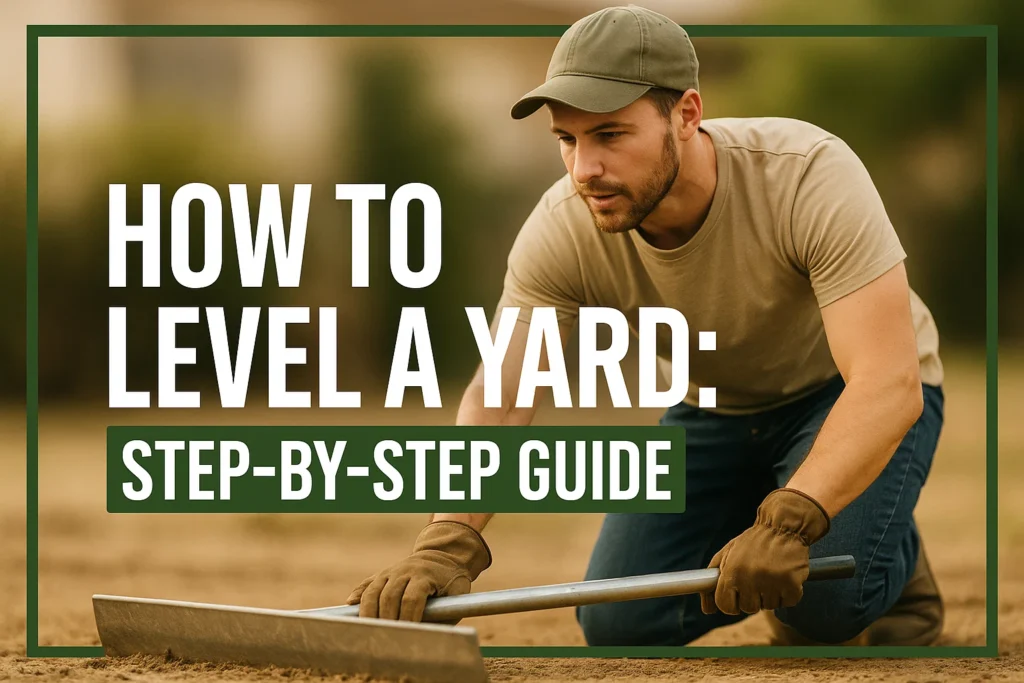
Level ground is the foundation of a great and functional outdoor living area. Uneven ground creates a potential for water to pool making mowing difficult and even worse, turning the ground into an unsightly danger zone. If you need to solve drainage issues on need to prep your yard for new grass leveling your lawn is a great start. This guide will help you with basic tasks to inspect condition and level your lawn. Make your yard smooth, safe and healthy again with the right method.
The Importance of Leveling Your Yard
Leveling your yard prevents water from collecting in low spots and interrupts erosion on hilly terrain. It enhances drainage so that the roots of grass can receive the oxygen and nutrients they need to become strong. A flat yard is also ideal for maintenance tasks like mowing and fertilizing since equipment runs smoothly and treatments are spread consistently.
What’s more, leveling the yard also makes it safer for walking and playing by eliminating tripping hazards. It produces a beautiful, functional area ideal for all activities in the outdoors and landscaping. Finally, water that stands or pools on a flat lawn can also be disastrous to your home’s value and foundation.
Step-by-Step Guide: How to Level a Yard
The prospect of leveling your yard can be daunting but breaking the task into easy steps will make it manageable. This guide is full of hints and tips to aid in leveling your lawn appropriately.
Step # 01: Assess the Yard
A good first step is to walk your yard and note any low or high spots. Set up stakes or flags to make a clear plan.
Step # 02: Cut the Grass and Clean it up
Mow the grass as low as you can to reveal low spots. There are rocks, sticks, and crap that would get in the way of the level.
Step # 03: Dethatch and Aerate Your Lawn
Use a rake or dethatcher to pull up thick thatch. Loosen the soil to prevent compaction and allow water and nutrients in.
Step # 04: Mix for Leveling
Combine topsoil, sand and compost to make a soil blend that both amends the soil structure while grading the yard.
Step # 05: Fill Low Spots
For deep depressions, carefully cut and lift the turf, fill the hole with the leveling mix, compact the soil, then replace the turf. For Shallow dips, scatter the mixture directly onto the grass and lightly press to level.
Step # 06: Smooth the Surface
Smooth over the soil with a lawn rake or a long straight board.
Step # 07: Seed and Water
Spread the grass seed in any bare areas and water thoroughly to allow soil to settle and new grass seed to germinate.
Step # 08: Use Again if Needed
After grass growth, check for any remaining unevenness. Put more soil mix in and do again as necessary for a good result.
How much does it cost to level a yard?
The average cost to level a yard is approximately between one and two dollars per square foot, depending on the size of the area and its level of complexity. For example:
- A 1,000 sq. ft. yard can be between $1,000 and $2,00.
- A 5,000 sq. ft. yard can be anywhere from $5,000 to $10,000.
- Larger yards up to 10,000 sq. per sq. ft. might cost $10,000 to $20,000
Additional factors affecting cost include the amount of fill dirt required, slope severity, and labor rates which typically run $50–$100 per hour. For land measurements, prices range from $3,000 to $45,000 an acre based on the size of the project. Keeping this in mind helps you budget appropriately for your yard leveling needs
Best Methods for Different Yard Types
It really depends on the type of yard you have and what approach will give you the best results. Your land can be level or sloped, but even still, the correct method you select will guarantee an evenly lush lawn.
Flat or Slightly Uneven Yard
For yards that are mostly flat with minor dips, simple top dressing with a mix of soil and compost is often enough. Lifting the material and raking it will lightly spread small lumps of matter, evening the little bumps out and taking care that all is of a fine, even quality.
Sloped or Steep Yard
For uneven terrain, grading and sculpting of the landscape are often necessary to prevent runoff and other erosion problems. Create retaining walls or terracing as is appropriate. A mix of soil and gravel can be used to manage the flow of water, as can ground cover planting to stabilize slopes.
Very Uneven or Bumpy Yard
Deep dips or big bumps involve more work, such as cutting turf from an area to fill low spots, regrading with the help of heavy equipment and layering soil or sand. This approach results in a more permanent fix and an even surface that will be easy to work on for all your landscaping needs.
Small or Compact Yard
Vertical gardening or raised beds may also be good options in small spaces to create flat areas. Tight soil mixes and precise gradings, of course, help get the most out of cramped quarters.
Selecting methods specific to your yard’s features can provide easier access to a beautiful and cohesive outdoor property. Correct preparation and correctly applied practice is best for the health, as well as the look of your yard.
DIY vs Hiring a Professional
When it comes to yard leveling, you have two main options: doing it yourself or hiring a professional. Each has its benefits and considerations.
DIY Approach
| Pros | Cons |
| Lower cost | Time-consuming and hard work |
| More control over the process | Requires some skill and knowledge |
| Flexible timing | Risk of mistakes and uneven results |
Hiring a Professional
| Pros | Cons |
| Fast and efficient | Higher cost |
| Expert knowledge and tools | Less flexible scheduling |
| Better long-term results | Need to trust someone else with the job |
In Summary:
DIY might be appropriate if you’re confident and have the time for small or basic yard edits. But when it comes to large, steep, or complex terrain, professional help can save hours of work and ensure success. Whether you do it yourself, have someone else take care of it or a combination of the two, your goal should always be a safe, level and healthy lawn that meets your needs and budget.
Tips to Maintain a Leveled Yard
- Water the graded sections well to help settle the soil and encourage grass growth.
- Do not walk heavily on new soil until it has compacted.
- Monthly aeration will also limit the compaction of your soil and encourage healthy roots.
- Use a lawn roller gently to help settle the soil but avoid overdoing it.
- Mow the lawn with care and change up your mowing pattern to avoid soil damage and ruts.
- Cover the lawn with an inch of topdressing every year to level small depressions and retain soil quality.
- Monitor drainage and fix problems immediately to help the lawn stay level.
Conclusion
Using dirt and sand to level your yard will help it look better, but also lay the groundwork for your grass or garden bed that’s on its way. It improves drainage, makes lawn care easier and provides a safe, even area for outdoor activities. If you want professional help to level your yard and maintain a lush lawn, Revamping Lawn is here for you. We use the top methods and tools for a long-lasting lawn. Contact us today and let us bring new life to your lawn!
FAQs
Yard leveling is the process of creating a flat or smoothing out low spots in your lawn by adding layers of soil on top for a more even appearance.
It varies depending on the size and condition of your lawn but generally takes a few days to install and settle.
Yes, small spots can be leveled at home as a DIY project, but larger or more complex yards may require professional assistance.
Once a year is generally enough to maintain soil quality and keep the lawn level.
Prices generally vary from $1 to $2 per square foot, depending on the size of the yard and complexity.