Does your lawn become a mini swamp whenever it has been raining? Are the puddles more protracted than friends in a funeral? And you are not alone and it is usually the poor drainage of the lawn that is to blame. Where water cannot get out of your yard it roots you out, it attracts weeds, and leaves your lovely grass as gasping as possible. But what would happen should the answer be that easy, poking holes in the soil? Enter aeration: the unsung hero of healthy lawns. This is an effective process that gives new life to compacted soil, natural channels to allow free flow of water as well and avoid the nightmare of lawn flooding. Say goodbye to soggy spots and hello to a vibrant, blooming lawn. Want to know how to aerate the lawn and keep the floods out? Let’s dig in!
What Is Lawn Drainage and How Does It Affect Your Yard?
Lawn drainage, the silent savior of grass. It is not something we actually consider until our bad yard is transformed into an unplanned pool, trying to be an actor in the Swamp Chronicles. In simple terms, the movement of water through and off the lawn is referred to as lawn drainage. Effective drainage ensures that water is absorbed in the soil or is carried off to avoid water accumulating on the ground.
Why does this matter? Imagine that your yard is that green oasis that your children can enjoy but lacks drainage and it becomes a wet battlefield where the roots of plants drown, the soil becomes compact and the grass screams of death. Stoddy soils suffocate roots, depriving them of oxygen and fungus- aatman of every ambitious gardener.
The Role of Proper Drainage in Lawn Health and Growth
Correct water drainage of lawns is the lifeblood that helps your lawn breathe easily and remain healthy. With proper draining of water, the roots of your grass get an adequate supply of moisture and oxygen. Such a balance contributes to a healthy growth of roots, green blades that are a healthy shade of green and a strong lawn that is resistant to pests and drought.
And without it, your lawn is a casualty of some negligence, you have roots withering, weeds growing and your once green lawn turns into a wet drawing of sorrow. The knight that your lawn is in dire need of is good drainage.
Common Causes of Poor Lawn Drainage
Unfortunately, the graveyard of good lawns is littered with common culprits of poor drainage:
- Compressed soil that smashes the pores required for water to escape.
- Thick clay soil serves as a resolute obstacle to retaining water.
- Poor land grading which does not drain the water.
- Clogged or broken drainage channels obstruct the natural drainage channels of water.
- Excessive sprinkling and inadequate control of sprinklers.
- Every criminal adds to that terrible wet dirt state of affairs myth where lawns do sink in wet nothingness, awaiting heroic rescue.
How Aeration Improves Lawn Drainage and Prevents Flooding
The Science Behind Aeration and Water Flow
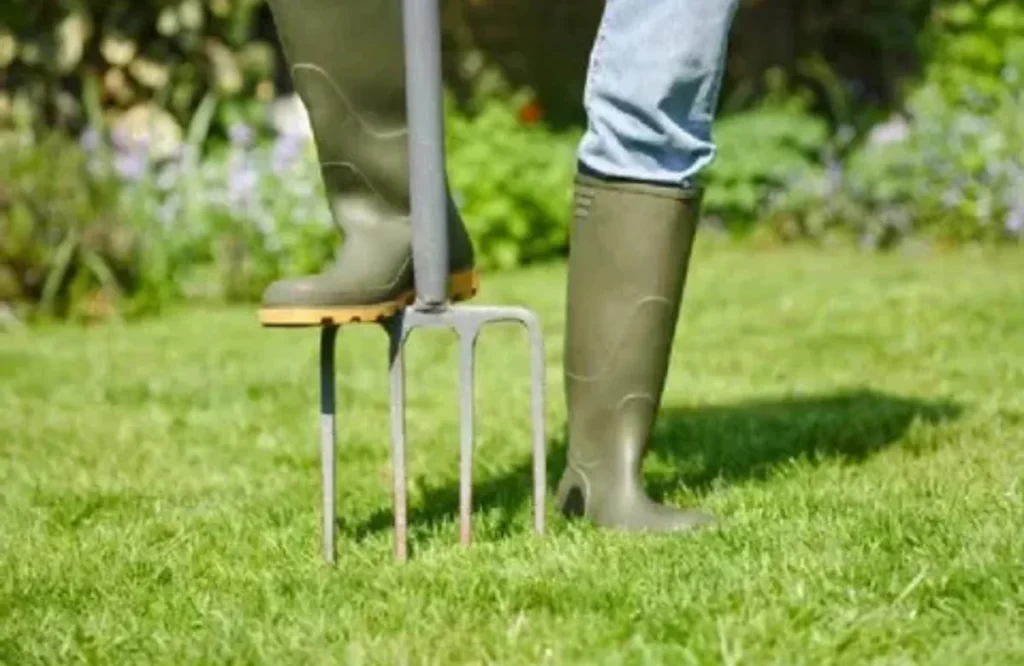
Read entertain the resurrection rite of suffocating grass. Aeration refers to the poking of holes in the soil to enhance the penetration of air, water and nutrients. Imagine that it is a breathing life to your lawn, whereby air lines become open, and water seeks other channels to the ground below.
Aeration, scientifically, dislodges compact soil, enhances soil pores and supports infiltration instead of running off. This implies that rain does not have to stagnate, and flows downward to water roots instead of submerging the surface.

How Core Aeration Creates Pathways for Better Drainage
The highlight of the show, core aeration, removes small chunks of earth from your lawn like a small grave digger, forming a network of tunnels. These tunnels serve as the fast lanes for this surplus water and provide it with space to escape quickly.
Aeration eliminates soil cores, which enhance surface compaction, a well-known source of poor drainage, and enhances healthier soil structure. The result? We no longer have the puddles on your lawn, but the water will exist and flow on, beautifully scattered out of the lawn, and eliminate the awful scenes of the lawn overflowing.
Does Lawn Aeration Help Reduce Flooding During Heavy Rains?
Yes, it does, as a good umbrella in the storm. Although aeration is not the solution in all flood situations, it is an important protector, making drainage far more effective in the event of heavy precipitation. The aeration causes the soil to permeate more, hence the water becomes slower, more saturated and permeable.
Still, when your lawn is a low-lying swamp that barely survives after the monsoons, aeration is not the final stage but the initial step to the restoration of the dry land.
Lawn Flooding Solutions: How Aeration Can Be Part of the Solution
Why Aeration Alone May Not Solve Severe Flooding Issues
And weep at the cruel reality: Aeration is not all-powerful, and not all-working against all floods. Flooding remedies for the severe forms of the lawn may involve a battalion of methods. Although aeration can help lessen compaction is lessened and the soil is made to be better structured, it cannot solve the problems that lie beneath it such as poor grading, underground water flow, or broken drainage pipes.
When your lawn often gets wet to a point that aeration cannot reach then it is time to bring in reinforcements.
Combining Aeration with Other Lawn Flooding Solutions
To bury poor drainage out of its grave, always mix up aeration with complementary measures:
- French or trench drainage is installed in order to divert water.
- Regarding your yard, to make it better on the slope and run off.
- Mixing organic materials to make heavy soils light.
- Repair of irrigation techniques to avoid excessive watering.
All these tactics provide a multi-level defense against the floods; metaphorically speaking, these are the funeral procession, paying a full funeral to the death of wet lawns.
DIY vs Professional Lawn Drainage Solutions
Although some tools of DIY aeration and simple cases of drainage repair can be applied, some cases are severe and require experts. A lawn drainage company is a professional company that comes with skills, equipment, and specific solutions. They can detect hidden drainage issues that an ordinary homeowner may overlook.
Therefore, next time you set out on, DIY project, consider the complexity of the water problems of your lawn; it may need the hand of a professional to prevent untimely death.
Choosing a Lawn Drainage Company for Effective Flooding Solutions
What to Look for in a Lawn Drainage Company
It is important to choose an efficient lawn drainage company. Look for:
- Experience in lawn drainage and flood control.
- Favorable feedback and reviews.
- Proper inspection and then solutions are proposed.
- Proposals with clear and listed items and prices.
- Experience of local weather and soil problems.
The right company will be an excellent undertaker of your drainage issues and a permanent solution will be done in a dignified manner.
Benefits of Hiring a Professional for Lawn Drainage Services
Hiring pros means:
- Accurate diagnosis of drain challenges.
- Availability of modernized equipment such as aerators, trenchers and drainage pipes.
- Individualized and efficient lawn flooding processes.
- Time and effort are saved by not having to go through an expensive trial and error.
- Increased lawn value and curb appeal with healthier turf.
The specialists convert the nightmares filled with water into green lawns, a service to life indeed.
Lawn Drainage Company Services: What’s Included in Lawn Flooding Solutions
Typical services from a lawn drainage company include:
- Grading of soil and analysis.
- Fundamental aeration and soil compaction.
- Laying of drain tiles, French drains or dry wells.
- Rebuilding of the landscape and re-contouring.
- Asphalt maintenance and inspection to maintain optimum drainage.
Select a company providing full-service, in order to have the drainage repair done, rather than half-heartedly.
Additional Lawn Drainage Tips to Prevent Lawn Flooding
Installing French Drains and Other Drainage Solutions
In addition to aeration, French drains (gravel-filled trenches with perforated piping) direct the excessive amount of water into the underground away from areas of vulnerability. Other methodologies that are effective are:
- Dry wells are used to absorb and dissipate water underground.
- Surface drains in low spots.
- Berms (heaped soil embankments) in order to divert flow.
- Every solution provides extra powder on your watery grave of the lawn.
How to Maintain Proper Lawn Drainage Year-Round
Maintaining healthy drainage for lawns is a year-round task:
- Aerate at least once annually (spring or fall).
- Keep gutters and downspouts clear.
- Avoid heavy foot traffic on wet soil.
- Use organic mulches to improve soil structure.
- Monitor and adjust irrigation systems seasonally.
Proactive maintenance keeps your lawn out of the flood zone forever.
Aeration vs Other Lawn Drainage Techniques: What’s the Best Option for Your Yard?
The first line of defense is simple, effective and friendly to the environment; it is called aeration. However, in cases of serious drainage issues, it would be most effective when combined with other methods of drainage, such as regrading and installation of drainage systems.
The most appropriate method to use is dependent on the type of soil, slope, and severity of floods. When the right solution to the drainage system in your lawn is required, consulting a reputable drainage business will guarantee you the custom-made solution your lawn will require.
Conclusion:
Aeration is not merely the act of poking your nose in the ground but cleaning up the natural water tracks in your lawns and making the water sink in the ground instead of lying on the surface. Aeration is beneficial in that it increases the absorption of water by the compressed soil and helps prevent flooding of the lawns, which makes the lawn grow healthier and more robust.
Although aeration is significant, excessive drainage issues can be solved using extra measures such as regrading, placement of drains, or expert assistance. By using both these approaches, you are bound to have a lawn that is no longer with constantly wet and is healthy.
And with proper treatment, your lawn may recover to great health despite the poor drainage. To get your lawn drainage solutions that will be reliable, we are sure that Revamping Lawns LLC can get you out of the problem of flooding forever.
FAQ’s
A: Typically, once or twice a year, especially during the growing seasons (spring and fall) to maintain optimal drainage.
A: Aeration is also helpful but can be frequently necessary when drainage installations or grading are necessary to address some severe flooding issues.
A: Find experience, online review, full-service and effective communication.
A: French drains, regrading, dry wells and irrigation practices which are corrected.