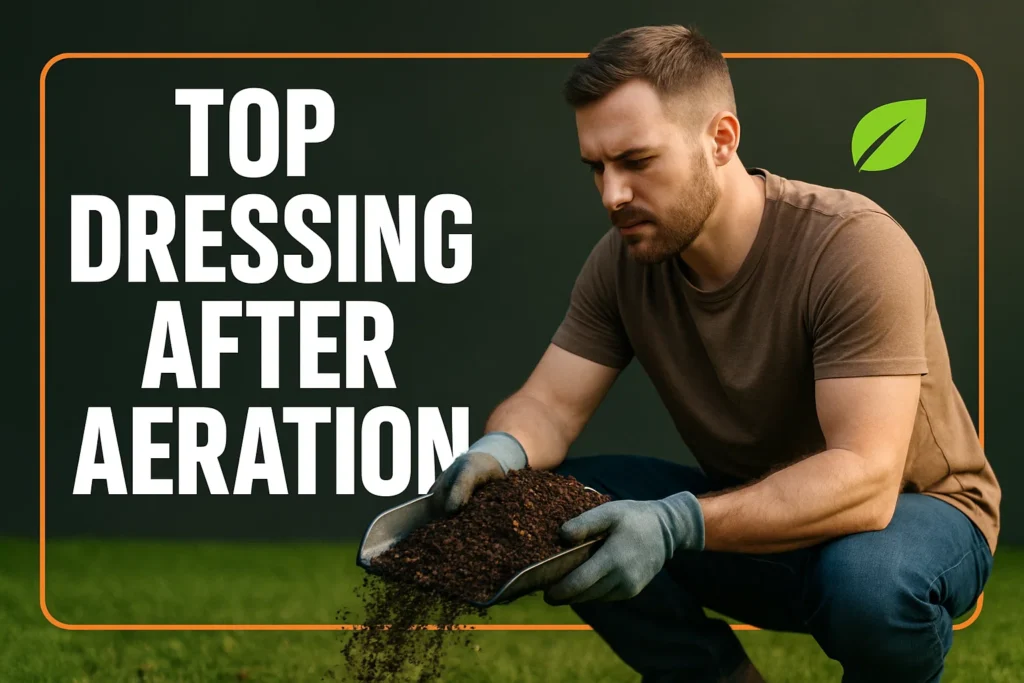
Turn your lawn patchy and dull into green and beautiful with the power aeration and topdressing will offer. This is the best one-two punch to revive weary turf to release trapped air and nutrients, as well as provide your soil with a nutrient makeover. Think of a lawn that is soft to walk on, drains most dreamily, and stays healthier in all seasons. You can be a backyard amateur or a lawn care expert, but you already know the secret of this combo and how to have a jaw-dropping yard.
Among others, do you want to know how you can make your grass look even better? It is time to get into the wonder of aeration and topdressing and make your lawn the dream of the block!
Why Aeration and Top Dressing Work Best Together
What Is Lawn Aeration and Why Does It Matter
Aeration of the lawn refers to the process of drilling minute holes on the soil surface to enable the soil to wards off air, water, and nutrients into the grassroots. This will combat soil compaction, which occurs naturally with the passage of time, as a result of foot traffic, heavy equipment, or heavy soils. Aeration and topdressing are the two that go hand-in-hand with each other since aeration exposes the lawn to the benefits that topdressing provides.
How Top Dressing Enhances the Aeration Process
Top dressing is the process of applying a thin coating of a substance, as a rule, soil, sand, or compost, on the area of your lawn. It fills holes formed by the aerator when it is used immediately after aerating and enhances the soil texture, as well as promoting even growth. The amendment layer also encourages quicker decomposition of organic substances, equalizes the pH levels and assists the lawn to maintain the moisture better.
The Science Behind the Aeration and Topdressing Combo
The magic is in that the top dressing spreader lays down material which is absorbed by the root zone of the lawn. The holes created by aerating the soil are just small tunnels that enable the sinking of the aerating sand or compost to enhance the drainage and presence of nutrients. Such a combination supports microbial activities that are crucial in nutrient cycling, which makes the turf healthy and able to withstand drought and diseases. In simple terms, aeration and topdressing reinstates the natural ecosystem of the soil in the long-term aeration and topdressing of the lawn.
What Happens Before and After Aerating Your Lawn
Before and After Aeration: What You Should Expect
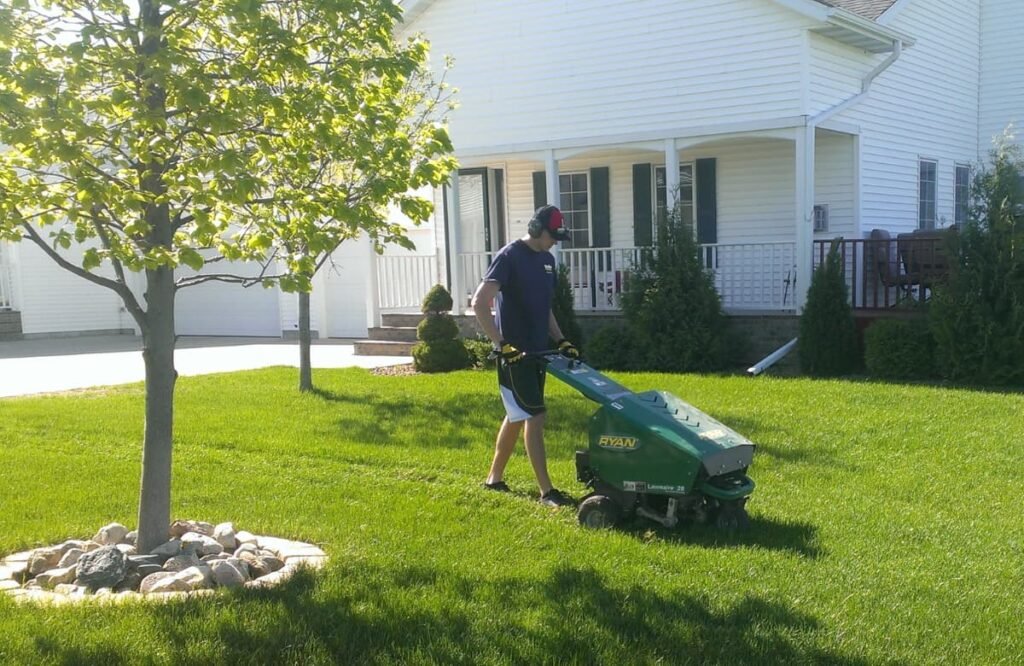
You may have a rather lifeless or compacted lawn that may have poor areas of drainage or superficial patches of grass before aeration. Immediately after aerating, the plugs or holes will be visible, and this is the normal, but actually, a good indicator. Aerobic pores are also opened and after that, a top dresser is used to fill those holes and level the surface so that grass grows evenly.
Should You Mow Before Aerating?
Yes, by mowing your lawn trim before aeration, there is proper access of the aerator to the soil. When there is no obstacle, it is a sign of good penetration. But never scalp, you can do away with grass, 2 or 3 inches deep, to avoid stress.
Do You Pick Up Plugs After Aerating?
Aerating of the soil should not be removed after core aeration. To permit them to decompose, this will enrich the soil. And leave them be, and they will be in a week or two, reconstituted part of your soil.
Watering and Lawn Care Steps After Aeration
Water lawns sparingly, following aeration, particularly before top dressing. Absorption of the amendments is better in wet soil. Topdressing, after which proceed with normal but frequent watering to allow new roots to grow and to settle the amendments of the soil, should follow.
Choosing the Right Top Dressing for Your Lawn
What Is the Best Top Dressing for a Lawn?
Top dressing is better depending on the type of soil and lawn requirements. In the case of sandy soils, the topdressing is enriched with compost. In case of clay-heavy soils, sand or sandy loam will enhance the drainage and texture. An appropriate combination is usually the best.
Topsoil vs. Compost vs. Sand, What to Use
- Topsoil increases organic matter but this may not be of good quality.
- Compost improves the nutrient content and microbe population of soil, increasing the level of soil fertility and water retention.
- Sand enhances drainage and aeration, yet it has no nutrients; hence its use should be minimal.
- The decision of which one to choose depends on the condition of the lawn. In some cases, sand mixed with compost makes a fairly balanced mixture.
Understanding Topdressing Materials and Mixtures
The affected professionals mix compost, sand, and topsoil to make a custom top dressing spreader mix, based on the lawn. This blend enhances the soil structure, minimizes compaction, nourishes root grass, and provides high drainage capability.
Why People Put Sand on Grass: And When You Should Too
You will also hear of the use of sand on grass where the soil of the lawn care is heavy clay or compacted soil. Sand decreases the compacted soil, enhances drainage and allows the roots to be more accessible to air and water. However, sand has to be mixed with organic matter in order to avoid soil stratification and nutrient cycles destabilization.
Step-by-Step: How to Top Dress After Aeration
Preparing Your Lawn for Top Dressing
When aerating, water the lawn lightly then, using a rake, loosen the plugs (if necessary) and remove the debris. This fertilizer assists in the combination of aeration and topdressing materials into your turf.
Using a Top Dresser or Top Dressing Spreader
Spreading of material is done using a top dressing spreader or top dresser device. These devices enable you to manage the layer of application and cover a vast area without burying grass.
How to Top Dress a Large Lawn Efficiently
In the case of large lawns, subdivide the space. Top dressing should be applied using either mechanized top spreaders or the motorized top dresser moving system. The subsequent step will be working the material in aeration holes with the help of a light roller or rake.
Tips for Applying Aeration Sand or Compost Evenly
- Hints on Even Application of Aeration Sand or Compost.
- Apply large thin layers (approximately 1/4 inch) so as not to smother grass.
- Get even coverage with the help of proper equipment.
- Immediately, water is applied so that it can be integrated.
- Materials should not be stacked in a single location, which causes suffocation.
Fertilizing and Seeding After Aeration
Should You Aerate Before or After Fertilizing?
Before fertilizing, it is always better to aerate since the pores in the soil will be opened, which will enhance the absorption of fertilizer. Immediately after aeration, the application of fertilizer applies nutrients to the roots.
The Best Fertilizer After Aeration
Apply balanced and slow-release fertilizer, which is tailored to the type of grass. The post-aeration fertilizer will be the best to stimulate robust root development and recovery of turf without burn.
Seeding Before or After Aerating: What’s More Effective?
Aeration followed by seeding is usually more productive since holes are the best places where the seed can be in contact with the soil to enhance germination and the depth of the lawn.
How to Water After Aerating and Seeding
Water the lawn with a little water and very often after seeding and aeration so that the soil is not too wet and at the same time not flooded. The correct moisture level facilitates germination of the seed and settling of the amendments in aerated soil.
Common Questions About Aeration and Top Dressing
Does Aeration Help With Drainage?
Yes, aeration greatly enhances the drainage process by dismantling compacted soil, and this process enables the water to infiltrate as opposed to lying on the surface.
Should You Aerate New Sod?
In the more temperate regions, new sod will not normally require aeration until it becomes stable, a process which may take one complete growing season. Premature aeration will destroy new roots.
What to Do After Aeration: A Simple Checklist
- Mow slightly shorter
- Pick up debris (optional)
- Apply top dressing evenly
- Fertilize and seed if needed
- Water lightly and regularly
Tools and Equipment for Aeration and Top Dressing
Choosing the Right Top Dresser or Spreader
Select the best dressing broadcaster that suits your lawn size and type. Small areas can be covered with the help of manual or tow-behind, and mechanized spreaders are more precise and faster at covering large areas.
Core Aeration vs. Zone Aeration: What’s the Difference?
Select the best dressing broadcaster that suits your lawn size and type. Small areas can be covered with the help of manual or tow-behind, and mechanized spreaders are more precise and faster at covering large areas.
Using Aeration Lawn Shoes: Do They Work?
Aeration lawn shoes are symbols fixed on the shoes worn by people, meant to punch holes in the soil as people walk. They may assist in lessening the minor compaction of the soil, but are less efficient as compared to mechanical aerators in real soil penetration.
Ecolawn Topdresser and Other Efficient Tools
Ecolawn and other branded top dressers allow easy spreading of sand or compost, and they come out even. An investment in quality equipment will save time and enhance the consistency in taking care of the lawn.
Conclusion:
The aeration and the topdressing are, in fact the best two-step combination of all the strategies in lawn care in order to achieve the maximum potential of your turf. This active pair helps make the soil healthier, increase the drainage, and establish a rich and colorful lawn that is striking season after season. With the right measures and the right materials, you will be able to encourage stronger roots, growth, and a strong youth to have a healthy yard, along with one that will be able to withstand every situation. It is not an ordinary lawn, but an award-winning one with this one-two punch.
For professional-grade tools, expert advice, and top-quality products to make your lawn care easier and more effective, visit Revamping Lawns today. Your dream lawn is just a step away!
FAQ’s
Your lawn appears to have been trampled, drains inadequately or has been worn away; time to get it on. Early spring or fall is ideal.
Yes, however, only in the case of clay soils or drainage amelioration. Take equal mixes in nutrient requirements.
They are useful, but they must be included in a complete program of lawn care, such as fertilization and watering.
They also have small advantages but can not replace machine aeration in the compacted lawns.